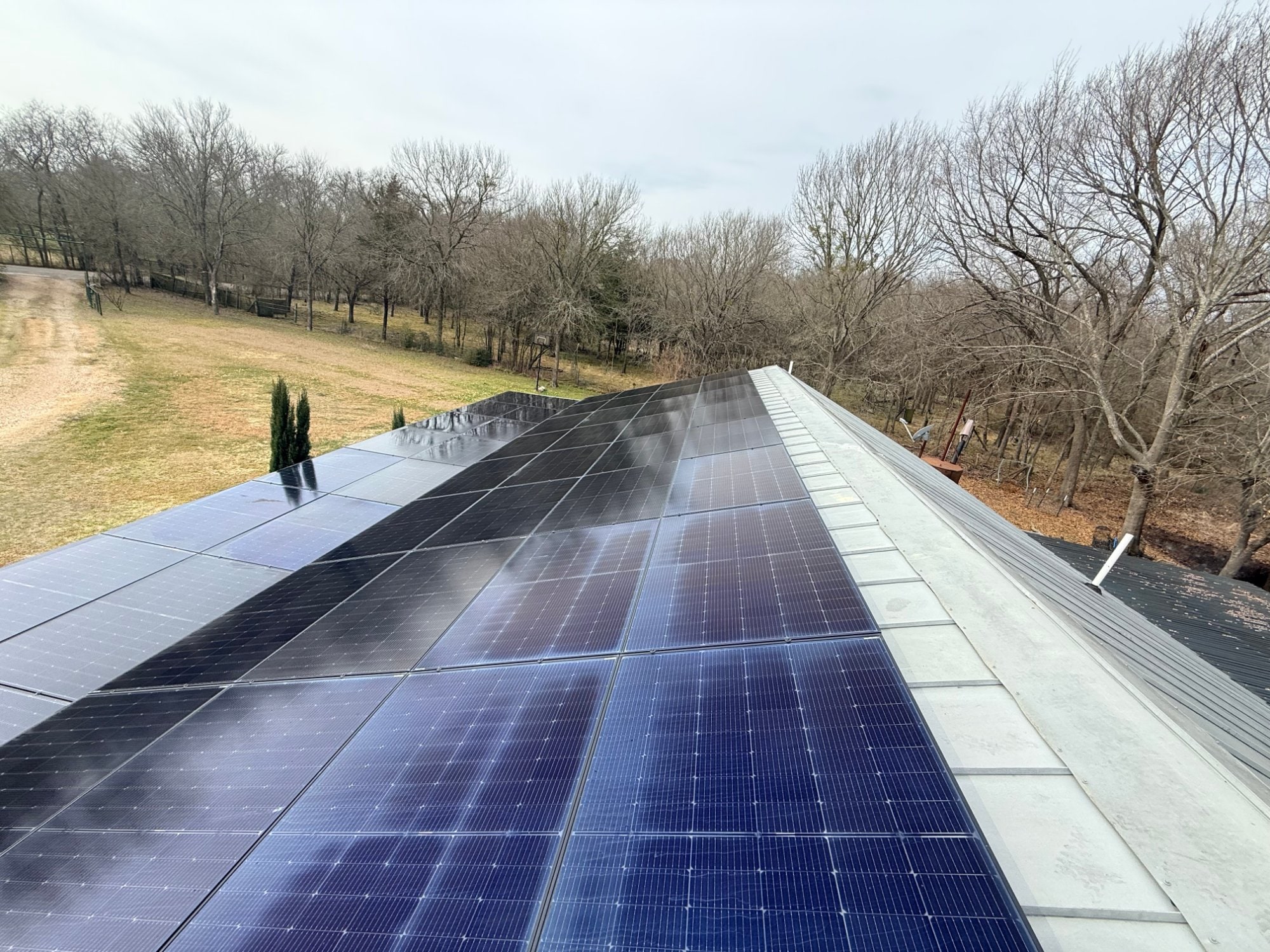
Expert Solar Panel Performance Testing for Dallas Properties
Dallas homeowners across Plano, Frisco, and the wider metroplex face a unique solar performance challenge: our combination of intense summer temperatures, occasional severe hail, and aging infrastructure means many residential and commercial systems installed 8-12 years ago are now underperforming without obvious signs. Our solar panel performance testing service specifically addresses Dallas's climate by using infrared thermography and IV curve analysis to measure how your panels respond to our 100-degree summer heat, revealing thermal stress and electrical degradation that standard roof inspections completely miss. Properties in North Dallas neighborhoods like Plano and Frisco often encounter HOA requirements for system maintenance documentation, and our testing provides the certified performance report that satisfies those architectural review boards. We also factor in Dallas's hard water and mineral dust, which can degrade anti-reflective coatings on older panels and reduce light transmission by 3-8%, and our testing quantifies exactly how much efficiency loss you're experiencing.
Dallas properties installed between 2012 and 2018 are now entering their critical maintenance window, and our performance testing reveals whether your system is operating at nameplate capacity or losing efficiency to hidden defects. We use thermal imaging and electrical monitoring equipment to test every string of panels, measure voltage and current output, and document performance data that pinpoints which panels or components are underperforming. The testing process takes 3-4 hours for a typical residential system in the Dallas area, and we provide a detailed report showing your system's actual performance versus expected output. Most Dallas homeowners discover their systems are operating at 85-92% efficiency, and we identify the specific issues-bird droppings, microcracking, inverter drift, or connector corrosion-that are stealing kilowatt-hours from your utility bill. Properties in the Preston Hollow and University Park subdivisions often have older systems installed in 2010-2014 that benefit most from this diagnostic work.